
The Moral Arc of Baseball
In October, 1993, the Philadelphia Phillies prepared to face the powerhouse Atlanta Braves in the National League Championship Series. I can remember an idea that floated around church circles with people my age at the time. It went something like this: if you could count up the number of ‘strong, Bible-believing’ Christians populating the rosters of competing teams, you might just divine which side God favored.
I took a long, hard look at the Phillies’ roster. Dykstra? Kruk? Schilling? Mitch Williams? Let’s just say, if the moral arc of baseball bent towards justice, things didn’t look good. Yet in an outcome that shocked the nation, ‘America’s Team’ fell to ‘America’s Most Wanted’, 4 games to 2. And I rejoiced!
How had this happened? Perhaps the members of the Phillies had repented of their wayward living and various misdeeds just enough to move the heart of God.
Or maybe God wasn’t as highly invested in the fortunes of baseball teams as we fans were.
What We’re Asked to Believe
Now, the world faces yet another Middle East conflict. It’s a military action begun with characteristic bravado from President Trump and Secretary Hegseth, speaking with all the dignity and solemnity of one of my 12-year-old students describing their nightly Playstation exploits.
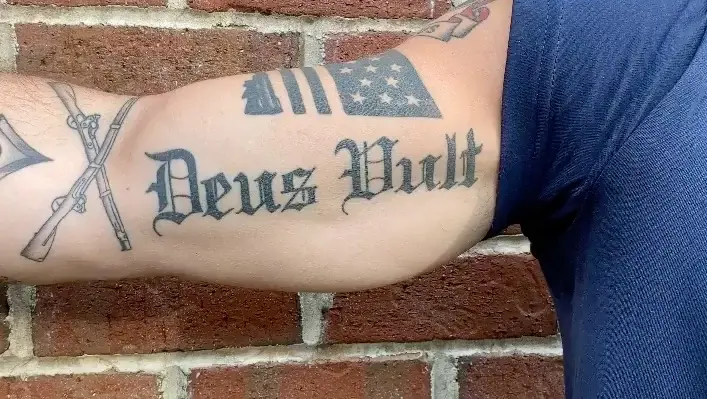
And a similar theological calculus to the one my friends and I applied to the sporting world has been taken up by pastors, politicians, and pundits beating the drum for war. It’s the calculus that asserts that we are the ones bending the moral arc of the universe on God’s behalf.
We’re meant to believe that we are so righteous, so noble, so far beyond reproach, that we must be waging God’s war. Thus, these champions expect us to accept a set of related premises without question or critical thought.
We’re meant to accept that Donald Trump has been endowed with a special genius which eluded the seven presidents before him who refused to directly engage Iran. That sending young men and women, completely unrelated and unconnected to himself, to the Middle East to kill and to face death is a sign of his God-given courage and fortitude.
We’re asked to believe him when he makes tenuous links (without legitimate evidence) between the Iranian leadership and the 1983 Beirut bombings, or the attack on the U.S.S. Cole in 2000, which necessitate a military response – several decades later.
We’re meant to think that the Iranian regime can’t wait to launch a nuclear arsenal at its enemies, that they’re somehow not clever enough to recognize it would mean their own destruction.
We’re meant to presume that regime is so brittle that knocking it over will be as easy as toppling a Jenga tower by removing a few blocks. We’re meant to expect the Iranian people to rise up en masse, that they’ve simply been waiting for their opportunity –that they won’t instead ‘rally around the flag’ in solidarity against the foreign aggressor.
We’re meant to believe they’ll simply forgive the shattering of their infrastructure, or the deaths of hundreds of their children (in an incident that, were the roles reversed, we would call barbaric) as regrettable but necessary collateral damage.
We’re expected to nod along as the goal posts of the war’s objectives are moved to suit whatever the administration can sell to the public as a ‘success’.
We’re asked to forget even our recent history, to forget that wars in the Middle East rarely solve problems, but tend to create a host of new ones, through power vacuums, instability, and hostility.
We’re meant to believe that all this will make the world safer for Americans, who weren’t feeling all that unsafe to begin with.
What happens, though, when these glorious outcomes projected fail to eventuate? When we realise we’re now mired in a mess we don’t have the capacity to clean up? When the blame is passed around from the top to the subordinates, and claims of ‘bad intelligence’ surface. When all that initial bravado is exposed as foolishness? When, in the long run, the world is no safer than it was before the conflict, and perhaps much less safe?
At that point, will it still be God’s war?
If This is God’s War…
In the interest of transparency, I’ll put my theological cards on the table: I don’t believe God orchestrates or maneuvers world events toward a given outcome. I don’t think God utilises wars to accomplish divine goals. Of course, I’m well aware that many people do believe these things.
Either way, maybe we can all acknowledge that it’s reckless hubris to presume we know precisely what God’s goals are in a given situation, or that God necessarily shares our vision of the world and of ourselves. Perhaps we’re not as righteous as we believe. Perhaps our ‘enemies’ are not quite as villainous as we believe. Perhaps our leaders don’t have the divine sanction we think they do. Perhaps the actions of every side grieve God.
For myself, I suspect God is more concerned over the death of a single Iranian child than over our national objectives.
If this was baseball, God wouldn’t be the team manager, or the umpire. God would be the father, trying to protect his kid from a wayward foul ball. Unfortunately, unlike baseball, war isn’t an entertaining game with a trophy and low stakes. In a war like this one, God isn’t the general. God isn’t the mastermind. God is the nurse, trying desperately to rescue the most vulnerable from the edge of death. If this is God’s war, then God’s place in it is with the suffering, with the homeless, with the destitute, and with the dying.
image sources
Adam Lee Benner

A teacher and writer born and raised in New Jersey’s Philadelphia suburbs, Adam writes about his former life in American Christian nationalism and the Evangelical right – and (hopefully) better ways to be Christian. He lived for several years with his wife and best friend, Renée, as missionaries in Asia before relocating to her hometown of Melbourne, Australia with their two sons.
Leave a Reply